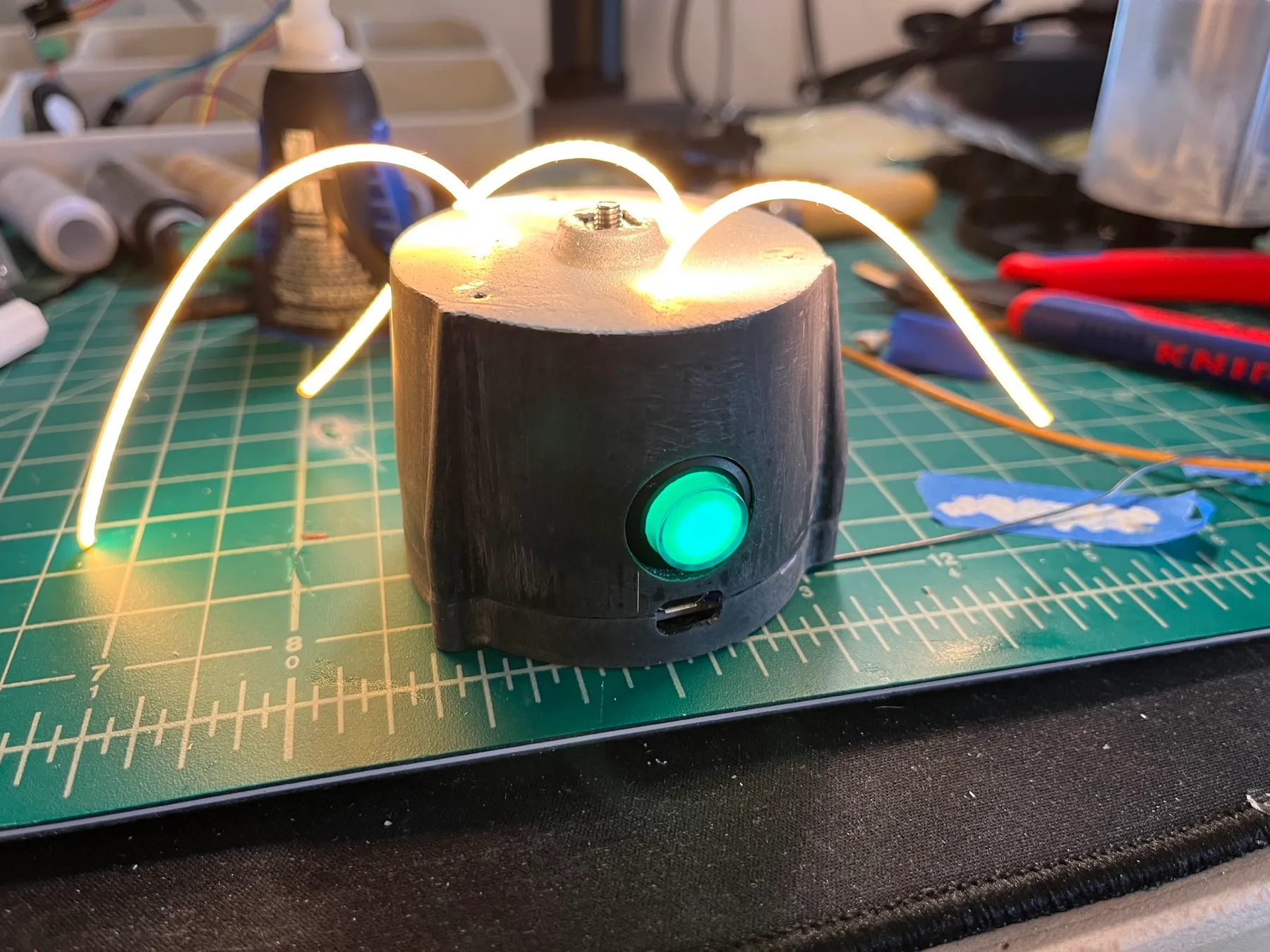
A lot of my projects begin with a cool part or component that I find. In this case, flexible filament LEDs. I remember playing with EL wire over a decade ago and thinking it was cool, but these are better in almost every way: much brighter, much more flexible, and easier to drive electrically.
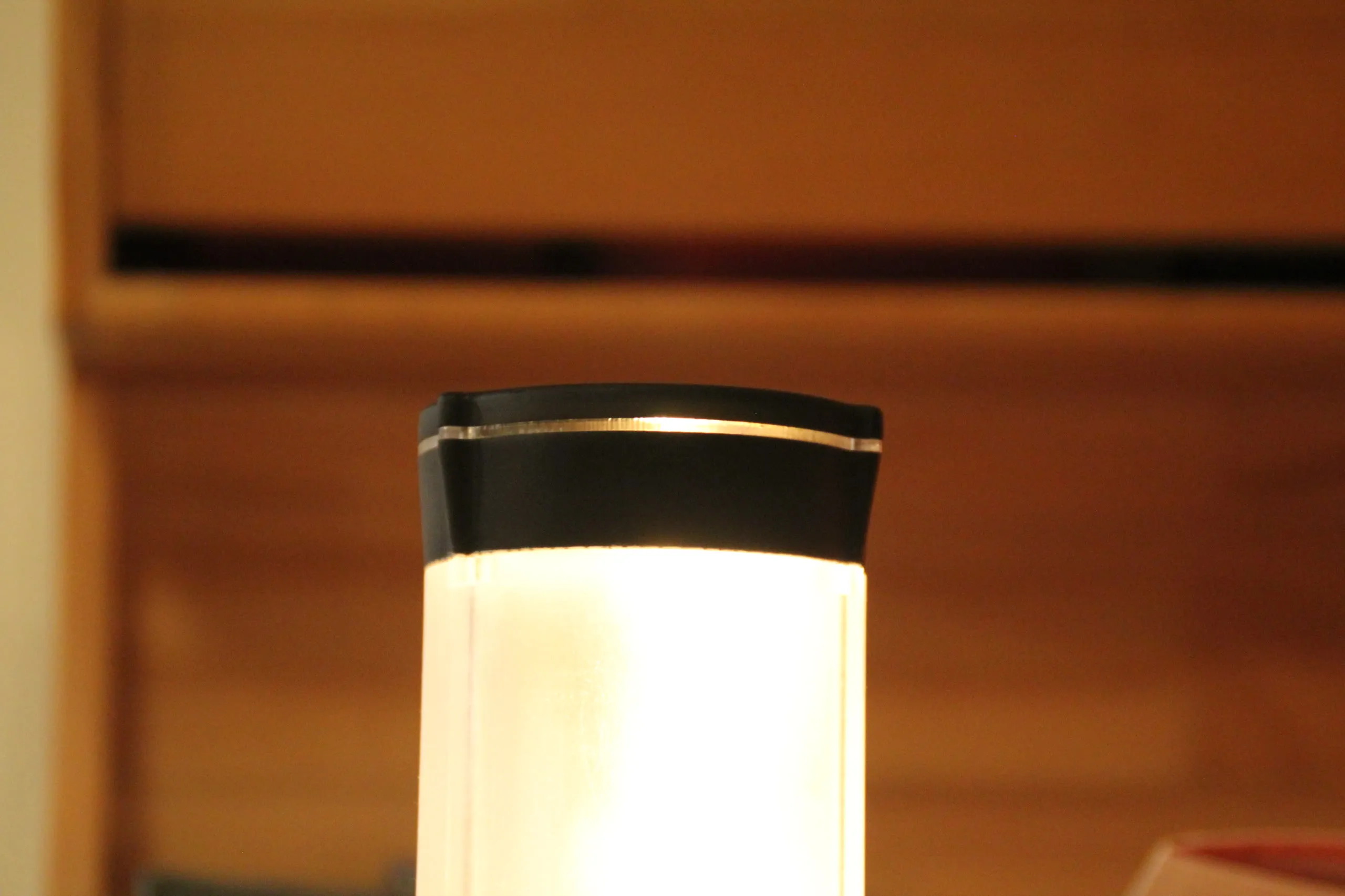
This basic lamp is what I came up with.
Figuring out how to capture the filaments mechanically was a fun challenge, as was coming up with a circuit to drive them. Despite being super bendy and flexy on their own, these things are still pretty fragile and I broke a few in the handful of assemblies and disassemblies I did.
The circuit
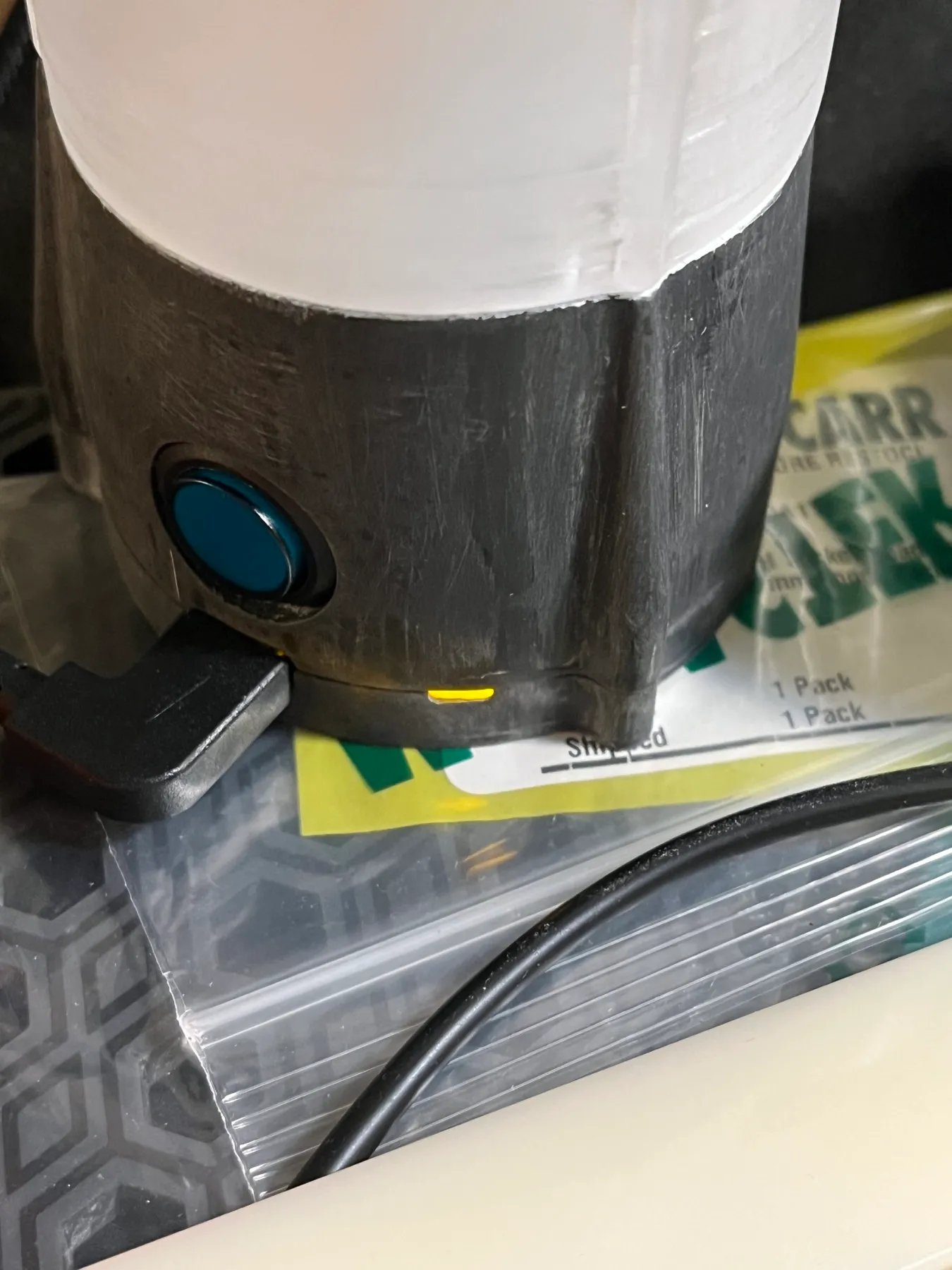
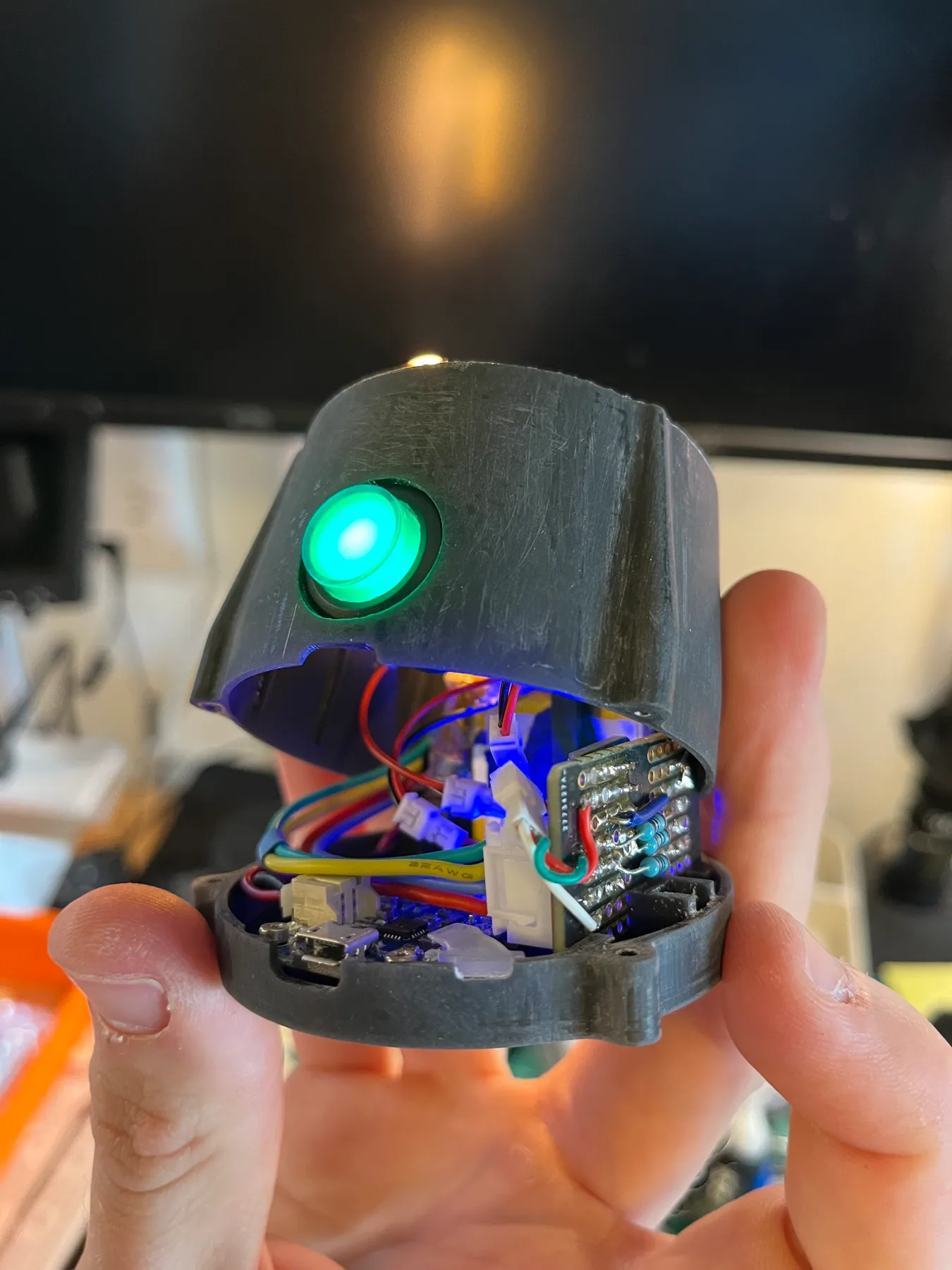
Electrically, it’s probably more complex than it needs to be: a PowerBoost bumps the 3.7 V LiPo input voltage up to 5 V and handles charging over USB. Then a 3.3 V regulator drops it back down to a steady voltage for the LEDs, and resistors limit current for each strand. The backlit button is connected to the enable pin on the PowerBoost instead of switching the battery voltage. It’s wired this way to allow for charging even when the lamp is off.
Holding the filaments
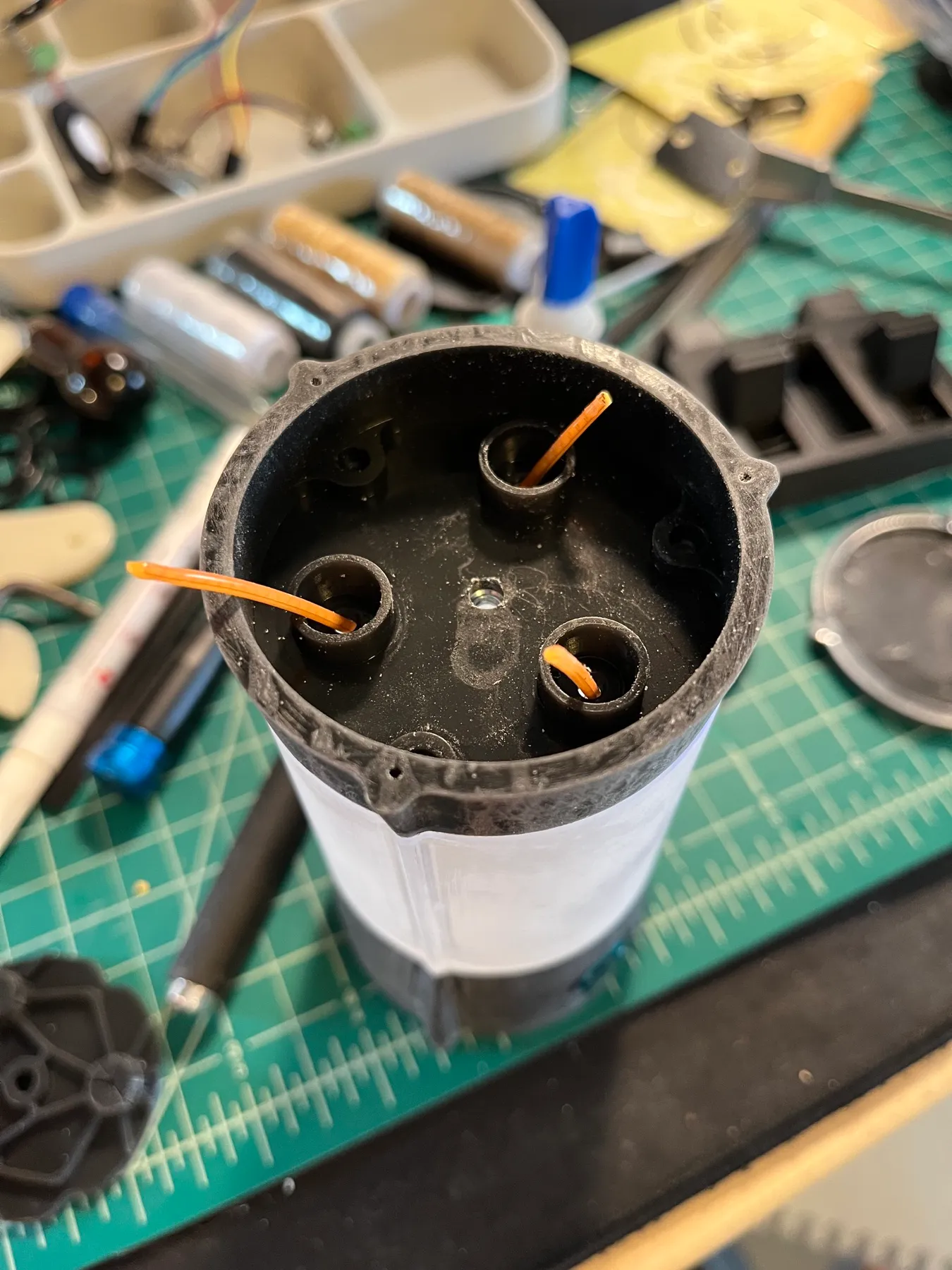
It’s probably also more complex than it needs to be mechanically, but figuring out how to retain these filaments on both ends was challenging. Since all the parts were 3D printed on Form 4 SLA machines, I could go crazy with the geometry, and chose to take advantage of what I know from machining: collets.
The top and bottom of the lamp have a collet plate and a matching nut plate. As the collet plate is squished into the nut plate, the interacting tapered surfaces cause the three collets to tightly grip the filaments.
The advantage is that all three filaments get grabbed at the same time by tightening just one M4 bolt on each side, so I can adjust them all right up until the end. And it’s a pretty gentle way to grab these fragile filaments, basically like a tight hug all the way around. But the collets and matching nuts take up a lot of vertical space and aren’t very friendly to other manufacturing processes.
Future improvements
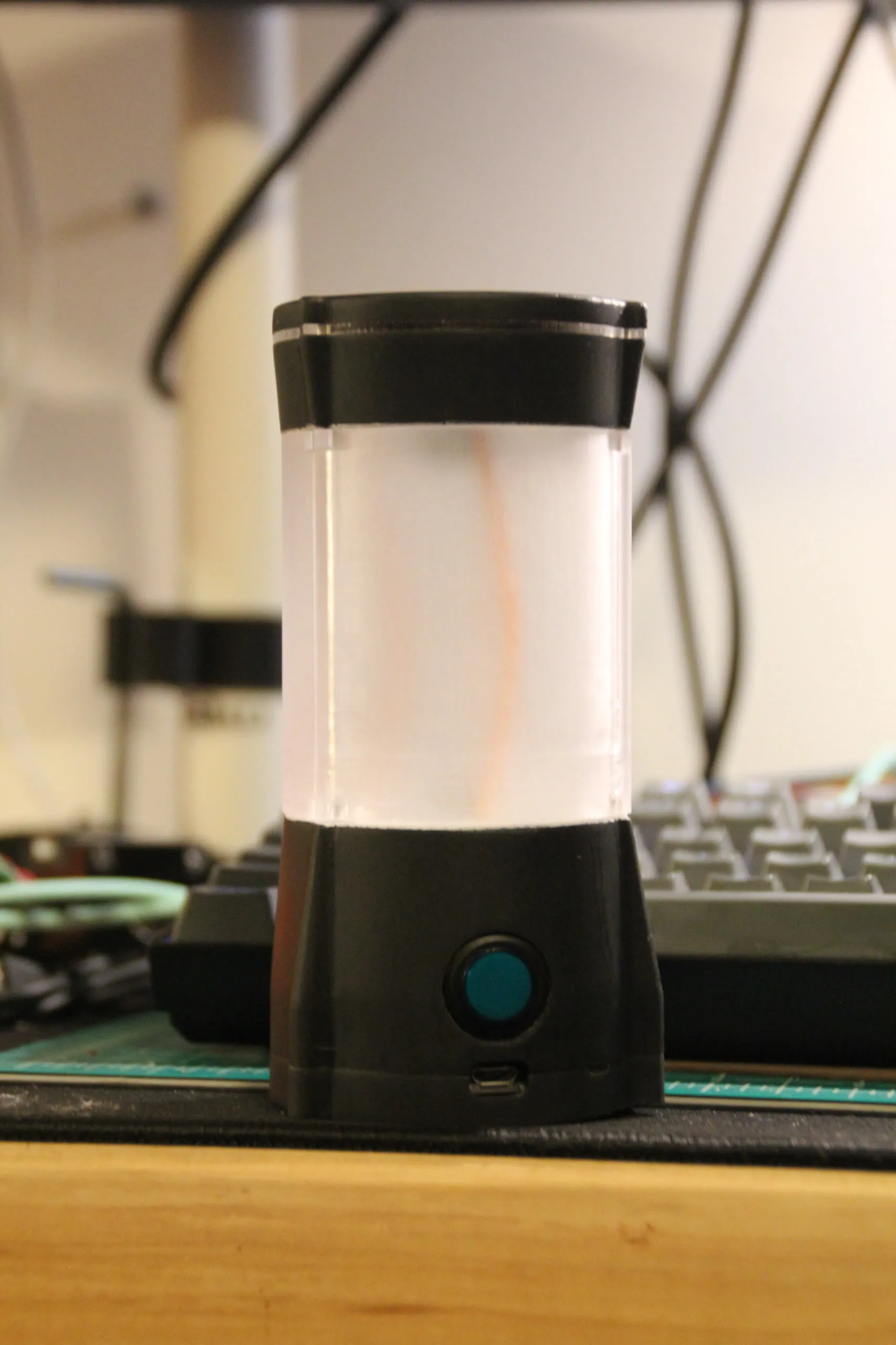
I was hoping the filaments would jiggle around more, but they don’t without vigorous shaking. Part of the appeal of these to me is how flexible they are, so I was bummed to see that they mostly stay in place, even when there’s a lot of slack.
I could save a lot of space by both simplifying the circuit design and putting all the parts on a custom PCB, even if that board still had to carry the PowerBoost module.
And I would love to simplify the mechanical retaining method to something that’s both more manufacturable and takes up less space. Maybe a single flexure plate on each side with embedded nuts and bolts that can grip the filaments independently. Or two converging plates that put a kink in the filaments to capture them.
More views